Nov 20
Gay SF doctor sues Waymo for AI-based discrimination
John Ferrannini READ TIME: 4 MIN.
A gay doctor is suing Waymo and Alphabet, its parent company, claiming “algorithmic discrimination” after he allegedly was flagged by an artificial intelligence program and refused service due to his Middle Eastern background.
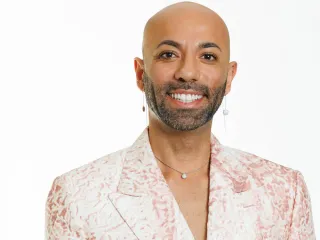
Dr. Nasser Mohamed, an internationally recognized LGBTQ activist born in Qatar, downloaded the self-driving car application Waymo in 2023 “but consistently received error messages preventing him from accessing the service,” according to a copy of the civil complaint he filed in San Francisco Superior Court on November 4.
After getting through to customer service, “Waymo Support told Plaintiff they had encountered an issue when attempting to verify his information for account setup but did not provide him with specific information about why he was being denied service.” When Mohamed raised the specter of discrimination, the ticket was closed, the complaint stated.
Alphabet, which also owns Google, employs an AI program as part of its identity verification process, according to the civil complaint. For security reasons, the AI program scans the U.S. Office of Foreign Assets Control Sanctions List. Under the auspices of the Treasury Department, the list identifies individuals subject to sanctions by the U.S. government for reasons related to foreign policy and safety.
“Plaintiff’s name is not on the OFAC Sanctions List,” the complaint continued. “However, there are other Middle Eastern and Muslim names on the list that are similar to Plaintiff’s name. Alphabet’s AI software erroneously flagged Plaintiff’s name due to its similarity to other Middle Eastern and Muslim names on the list. Plaintiff – a user of a number of services provided by Alphabet subsidiaries like Waymo – is now internally flagged as a national security risk by Alphabet.”
Waymo, and other autonomous ride-hailing services, have become ubiquitous in San Francisco, the world’s tech capital. Waymo recently announced a significant expansion of its footprint. While it had started on roadways in the city proper, on November 12 it announced it will soon operate on the entire San Francisco Peninsula, all the way to Norman Mineta International Airport in San Jose.
It’s in the process of launching its taxi service at San Francisco International Airport.
The company’s expansion has not been without controversy – queer District 9 Supervisor Jackie Fielder is asking state legislators to give voters the power to decide if the autonomous vehicles should be allowed on California streets after a Waymo killed KitKat, a beloved bodega cat in the Mission district. She represents the heavily Latino neighborhood at City Hall.
Supporters cite studies claiming automated vehicles are safer than human-driven vehicles.
Reached for comment, a Waymo spokesperson stated, "Waymo does not discriminate use of our service. We are committed to providing access to all in the communities we serve. We disagree with the claims made."
Alphabet, Waymo’s parent company, didn’t return requests to comment about Mohamed’s suit.
The complaint alleges two counts: violation of the state’s Unruh Civil Rights Act and an allegation of unfair business practices.
Mohamed declined a request for an interview, citing the need to “remain consistent with my messaging as this is a case going through active litigation.” Among questions asked over email was how Mohamed found out about the alleged discriminatory activity on the part of Waymo and Alphabet, as Waymo disputes the claim of discrimination.
However, he did provide a lengthy statement in response to the Bay Area Reporter’s inquiries about his lawsuit.
“Without referencing the ‘why’ of what happened, I can tell you that I have been denied service for two years by Waymo and I was not allowed to contest that decision,” Mohamed stated.
“Automating an identity verification step in the sake of efficiency, and not allowing users to contest those decisions, is the reason I am filing a complaint to protect my own self and the public from such practices. Companies that employ AI for their main product or at any point during their interaction with humans must adhere to civil rights and not violate them. I think most of us would reject a world where automation defines who we are, speaks on our behalf, and forces us to live with its mistakes – without any way to challenge or correct them.”
The B.A.R. did interview Mohamed’s attorney, Shounak S. Dharap. He said the suit is asking for the companies’ practices to be changed.
“The primary remedy in the complaint is injunctive relief,” Dharap said. “Basically, a change in the way the systems operate to make sure this doesn’t happen to anybody else.”
Dharap said that Waymo and Alphabet have not responded yet to the suit.
“They usually have about 30 days from the date of service,” he explained.
Dharap said that with AI becoming more and more entrenched in different areas of American life, expect to see more cases of algorithmic discrimination. He also predicted people should expect AI to exacerbate other legal issues.
“We are in a pretty perilous time with respect of reliance on automated systems,” Dharap said. “It’s definitely been a huge area of litigation in all kinds of different fields. We see it in the insurance industry, employment laws – automation is everywhere. It’s already happening. There are a slew of cases out there of algorithmic discrimination, and oftentimes it’s because we rely too heavily on these systems without proper human oversight.”
Dharap warned that, “especially with AI, everyone’s leaning in, but of course, what we’re also seeing is a lot of potential issues, whether it’s biases or lack of oversight over how these systems operate. This can create issues that fall within the civil rights statutes California has to protect people from discrimination or arbitrary actions.”