December 9, 2025
Trans Methodist Pastor Whose Coming-Out Sermon Went Viral Says Outpouring of Support Is Transforming Her Ministry
READ TIME: 4 MIN.
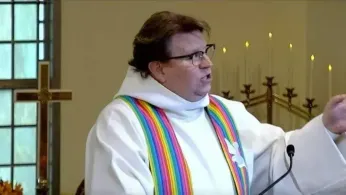
When the Rev. Phillippa Faye “Phil” Phaneuf stepped into the pulpit of her United Methodist congregation in Rochester, New York, for a Sunday service in late 2025, she signaled that something unusual was coming: a “special announcement from the pastor.” In a sermon that has since been widely shared online, she told worshippers that she is a transgender woman and that she would be transitioning while continuing to serve as their pastor. The moment, captured on video and posted to platforms including YouTube , quickly went viral and sparked intense discussion about inclusion and gender identity in American churches.
In the sermon, Phaneuf emphasized that she was not “becoming a woman” but rather “giving up pretending to be a man,” explaining her transition as a process of living more authentically. She told the congregation that her pronouns would be she/her and that her name would change to incorporate a family connection, while stressing that she did not intend to act as “pronoun police” toward anyone adjusting to the change. The pastor added that her hope was that the church would become known in the wider community as “an even safer space for people who have felt marginalized.”
The video drew national and international attention after it was published by The New York Post and circulated by other outlets and commentators. Conservative media framed the sermon within broader debates over transgender rights and religious institutions, with some critics sharing edited clips to their audiences on platforms such as YouTube . At the same time, many viewers responded with messages of support, sharing the clip across social media and praising the congregation for applauding and verbally affirming Phaneuf during the announcement.
In the weeks since the sermon was posted, Phaneuf has said she has been “flooded with love” from members of her church and from strangers who reached out after seeing the video online. According to reporting by LGBTQ Nation, she described receiving affirming messages from transgender people, parents of transgender youth, and clergy across denominations, many of whom thanked her for making her transition public from the pulpit. She told the outlet that people had written from outside the United States to say that her story gave them hope that faith communities could be more accepting of LGBTQ+ identities.
Phaneuf has also spoken about the emotional complexity of coming out while serving in a visible leadership role. She said that while her congregation’s immediate response in the sanctuary was overwhelmingly supportive, she simultaneously received a text message from her parents on the morning of the sermon saying that they did not support her transition and had “chosen their convictions and their beliefs over supporting their child.” She relayed that message to the congregation during the sermon, contrasting her family’s rejection with the welcome she was experiencing from church members gathered in front of her. This tension between family estrangement and communal affirmation has been a recurring theme in her interviews since the video went viral.
Phaneuf’s story is unfolding against the backdrop of ongoing debates within the United Methodist Church over LGBTQ+ inclusion. After years of conflict over policies restricting the ordination and marriage of LGBTQ+ people, a historic General Conference vote in 2024 removed bans on LGBTQ+ clergy and same-gender weddings, allowing regional bodies and congregations greater freedom to affirm and fully include LGBTQ+ members and leaders. Advocates within the denomination have described this policy shift as opening new space for openly LGBTQ+ clergy to serve without fear of automatic discipline, even as some congregations and pastors continue to disagree.
LGBTQ+ faith organizations, including the national group Reconciling Ministries Network , have long argued that transgender people can and do serve faithfully in pastoral ministry and that public testimonies like Phaneuf’s can help reduce stigma in religious communities. The Human Rights Campaign has noted that affirming faith communities play an important role in the well‑being of LGBTQ+ people, particularly transgender people who may face rejection from families or religious institutions. These organizations point to stories such as Phaneuf’s as evidence that some congregations are actively working to become safer spaces, even as wider public debate over transgender rights remains polarized.
Phaneuf has said that she hopes her transition will help people who have felt excluded from church to reconsider whether there might be room for them in spiritual communities that explicitly affirm LGBTQ+ identities. She has framed her coming‑out not only as a personal milestone but as an invitation to her congregation to join her in what she called a “season of creative transformation,” encouraging them to reflect on how they can embody hospitality and care for those who have experienced marginalization. As the online attention surrounding the viral video continues, she has reported that the steady flow of supportive messages has reinforced her conviction that living openly as a transgender pastor can itself be a form of ministry.