4 hours ago
‘Traitors’ UK Contestant Matthew Hyndman Explains Nude Headstand Photography As Queer Defiance
READ TIME: 19 MIN.
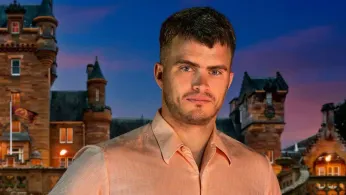
Scottish artist and creative director Matthew Hyndman, one of the openly LGBTQ+ contestants on the current UK series of BBC reality hit The Traitors, is attracting fresh interest in his ongoing nude photography project after discussing why he photographs himself nude while performing headstands.
In a recent feature from LGBTQ+ outlet Attitude, Hyndman explained that his series of images, which show him naked and balancing on his head in rural Scottish locations, is intended as “an act of defiance and liberation. ” The photographs form part of his project Upended, a ten‑image series exploring vulnerability, landscape, and self-acceptance.
Upended was exhibited at Bard, a gallery and shop dedicated to Scottish craft and design in Edinburgh, where it coincided with the 2024 Edinburgh Art Festival. Bard confirmed that the exhibition ran until 27 October 2024, with the works showing Hyndman inverted and unclothed across different outdoor locations. Attitude reported that while the Bard run has ended, selections from the series remain visible on Hyndman’s dedicated creative Instagram account.
Speaking to Wallpaper, Hyndman said that Scotland has become a “sanctuary” for him and described his headstands as a way of shedding “an institutionalised version” of himself shaped by earlier religious pressures. He added that being upside down offers a kind of abstraction that offsets the cultural weight often attached to nudity. In Attitude’s interview, he similarly framed the work as baring both his body and his history, positioning it against more traditional approaches to Scottish landscape photography.
Hyndman’s photographs are also a response to social media restrictions and the policing of queer bodies online. He told Wallpaper* that his naked headstand images have been banned from major platforms, which he sees as reinforcing norms about which kinds of bodies and expressions are considered acceptable. By instead presenting the work in a gallery context and on a curated creative Instagram profile, he seeks to reclaim control over how his body and story are viewed.
The project is closely linked to Hyndman’s personal journey as a gay man who grew up in a devout Christian environment. Wallpaper reported that in his twenties he was part of a religious group and serving on a mission ship in Southeast Asia when he accidentally sent a romantic WhatsApp chat with a man to his entire congregation, a moment he describes as upending his life. He now lives in Edinburgh with the man who met him “off the boat, ” a relationship he credits with helping him build a sense of home and safety in Scotland.
Hyndman’s practice extends beyond art into LGBTQ+ advocacy. He is a co‑founder of the Ban Conversion Therapy campaign group, which lobbies the UK government to prohibit conversion practices that attempt to change or suppress a person’s sexual orientation or gender identity. Attitude noted this work in its coverage, highlighting how his activism and art both confront the legacy of religiously framed shame and efforts to portray queerness as something that can or should be “fixed. ”
The renewed interest in Upended comes as the fourth UK civilian season of The Traitors airs on BBC One and BBC iPlayer, where Hyndman appears as a 35‑year‑old creative director. The BBC has promoted the series as featuring a diverse cast, and Attitude reported that Hyndman is among a small group of out LGBTQ+ contestants this year. The show’s popularity has brought his photography and activism to a wider audience, particularly among queer viewers who see his openness about faith, sexuality, and body image as resonant.
Within LGBTQ+ communities, Hyndman’s narrative fits into a broader pattern of artists using nude self‑portraiture to challenge shame linked to religion, gender expectations, and the policing of queer bodies. By situating a nude, upside‑down queer body in admired Scottish landscapes, Upended reframes who is allowed to belong in these symbolic national spaces and invites viewers to consider how vulnerability can coexist with humour and pride.